

In the context of the rapid development of global logistics and e-commerce industry, the role of packaging as a protective barrier has become increasingly prominent in the whole chain of goods from production to consumption. Protective packaging is not only a key means to avoid damage to goods and reduce customer return rates, but also an important carrier for enterprises to practice sustainable development today.

I. Definition and Core Value of Protective Packaging
Protective packaging refers to a packaging solution that provides physical protection for products during transportation, storage, and sales through material selection, structural design, and process optimization. Its core functions include shock absorption, moisture-proofing, dust-proofing, tamper-proofing and temperature control, etc., which can effectively reduce the damage rate of goods during circulation. According to industry data, enterprises that adopt scientific protective packaging can reduce the average return rate by more than 30%, improve logistics efficiency by 25%, and significantly reduce economic losses and resource waste caused by product damage.
II. Applicable Scenarios of Protective Packaging
The application of protective packaging should be judged by combining product characteristics and circulation environment. In the field of fragile items (such as electronic devices and glassware), cushioning materials (such as bubble wrap and foam plastics) should be used to disperse the impact force. The fresh food industry relies on the combination of insulated boxes and ice packs to maintain a low-temperature environment and ensure the freshness of the products. Precision instruments need anti-static packaging to prevent circuit damage. In addition, complex scenarios such as long-distance transportation and cross-border logistics, as well as high-value items like luxury goods and medical devices, all require customized protective packaging solutions.
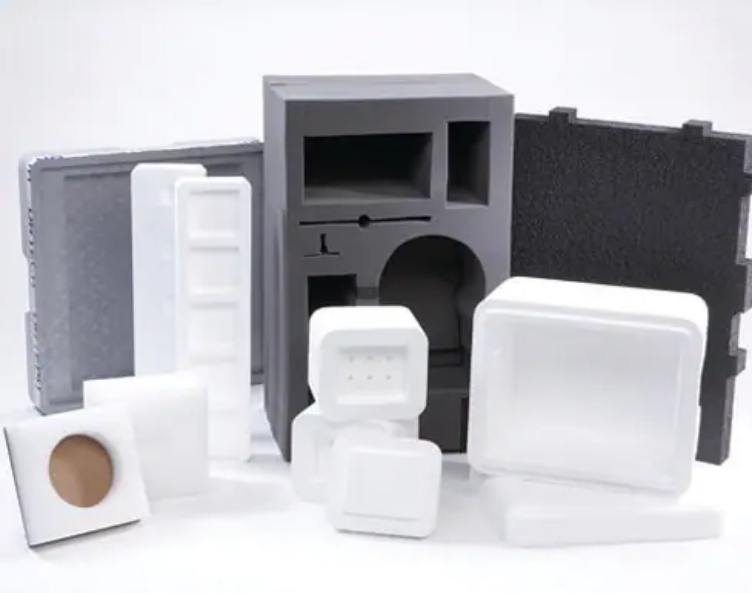
III. Environmentally Friendly Packaging Solution: Innovation from Materials to Design
With the advancement of the "dual carbon" goal and the tightening of environmental policies, the environmental problems of traditional plastic packaging have become increasingly prominent. The "Feasibility Study Report on Environmentally Friendly Packaging Solutions Project 2025" indicates that the global packaging industry generates over 400 million tons of waste annually, with single-use plastics accounting for 40%. In this context, three green solutions have become the mainstream of the industry:
1. Biodegradable material substitution
Bio-based materials represented by polylactic acid (PLA) and polyhydroxyfatty acid esters (PHA) can naturally degrade into carbon dioxide and water under composting conditions, with a degradation rate of over 90% (ASTM D6400 standard). For instance, starch-based cushioning materials have been widely used in the packaging of electronic products. Their cost is 15% lower than that of traditional foams, and their raw materials are derived from renewable crops.
2. Reduction and Circular Design
Reducing material usage through structural optimization is the core strategy of eco-friendly packaging. A 30% increase in corrugated board folding rate can reduce transportation energy consumption. The recycling rate of single-material packaging (such as rPET recycled plastic bottles) is 50% higher than that of composite packaging. Modular design enables packaging reuse. For instance, smart express delivery boxes can reduce disposable packaging consumption by 80% through recycling.
3. Recycling System and Technological Innovation
The establishment of a closed-loop recycling network is the key to green packaging. The EU's Packaging and Packaging Waste Regulation requires that the recyclability rate of packaging materials reach 77% by 2025. China's 14th Five-Year Plan for circular Economy also clearly promotes the resource utilization of waste packaging. Chemical recycling technology breaks through the bottleneck of physical recycling, converting plastic waste into raw materials and increasing the proportion of recycled materials to over 50%.

Protective packaging is shifting from "single protection" to "equally emphasizing safety and environmental protection". By choosing biodegradable materials, optimizing design plans, and participating in recycling systems, enterprises can not only reduce logistics costs and enhance brand image, but also contribute to global ecological protection. In the future, with the application of Internet of Things tracking technology and blockchain carbon footprint accounting, protective packaging will achieve sustainable management throughout its entire life cycle and become an important link connecting product safety and green development.
