

In daily life and logistics transportation, bubble wrap is widely used as a protective material. However, many people are confused about the correct usage method: Should the bubbles face inward or outward? Recently, experts in the field of professional logistics packaging combined with experimental data and actual cases to explain the scientific use of bubble film and common mistakes for the public.
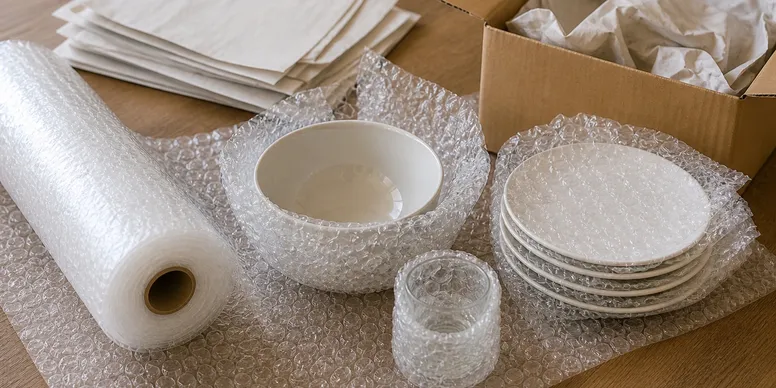
I. Core problem: Bubble orientation determines protective effect
The bubbles should face the protected items (the inner side). According to the "Buffer Material Usage Specifications" released by the Logistics Packaging Association in 2025, the bubble layer of the bubble wrap has an elastic buffering effect. When the bubbles face the items, they can absorb external impact forces through air cavities, forming an "air cushion protective layer". If the bubbles face outward, the smooth surface of the film directly contacts the items, which not only cannot play the buffering effect but also may cause the surface of the items to be scratched due to friction. The comparative experiment in an e-commerce logistics laboratory shows that the damage rate of parcels with inward bubble is 62% lower than that of parcels with outward bubble after simulated transportation turbulence.
2. Step-by-Step Guide: Four Steps for Correct Use of Bubble Wrap
1. Pre-treatment of Items
- For items with sharp edges and corners (such as glassware, electronic products), wrap the edges and corners with soft cloth or paper first, and then cover the bubble film to avoid the sharp part of the bubble.
- Irregular shape items need to focus on wrapping vulnerable parts, such as lenses, screens, etc., can be strengthened and fixed by the "cross cross winding method".
2. Bubble Wrap Wrapping Techniques
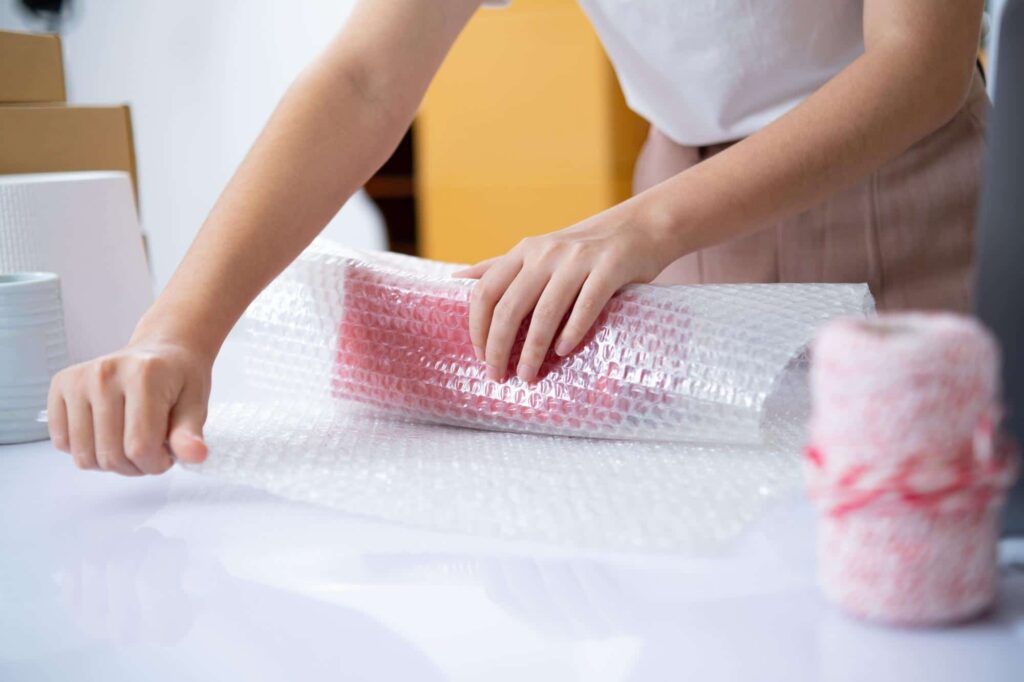
- Lay the bubble wrap flat, with the bubble side facing up (towards the items), and place the item in the center.
Wrap the item from both sides towards the middle, ensuring that the bubble layer fully adheres to the surface of the item. Overlap the edges by 5 to 10 centimeters and secure them with tape.
- If the height of the item is more than 10 cm, it needs to be wrapped around the vertical direction for 1-2 times to form "all-round protection".
3. Filling and Fixing Inside the Box
- Lay 2-3 layers of bubble film on the bottom of the carton, the thickness is not less than 3 cm, as the bottom buffer.
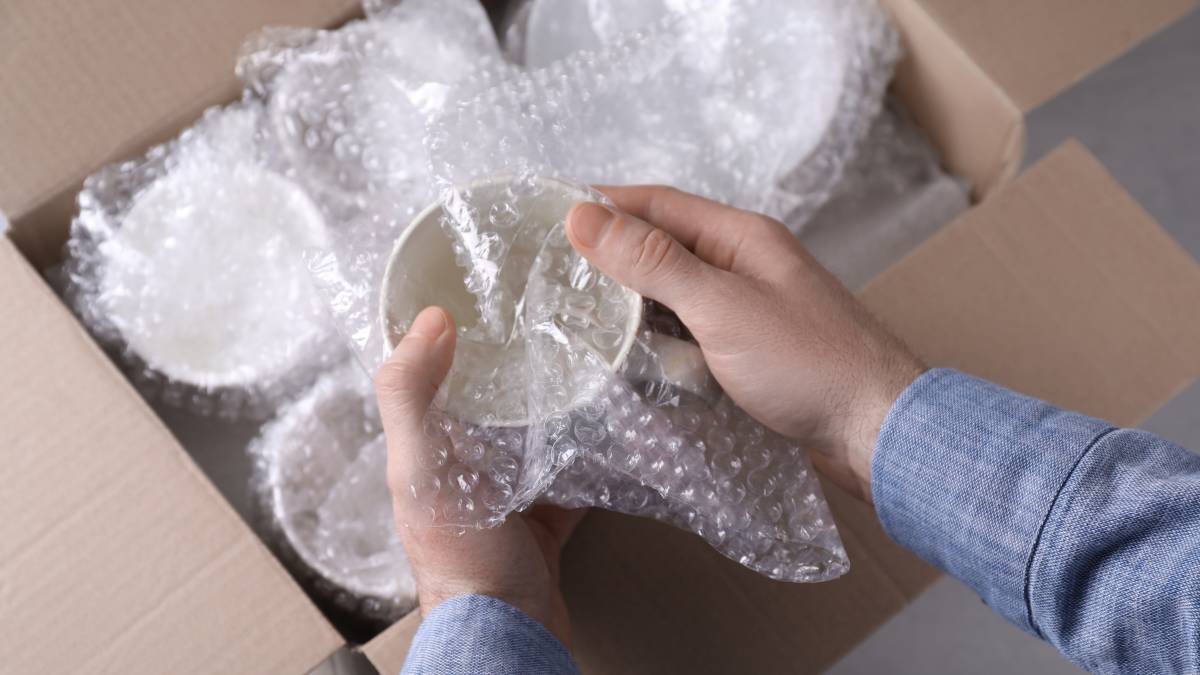
- After putting in the wrapped items, fill the gaps in the box with bubble wrap to prevent the items from shaking during transportation. Experts suggest that the amount of gap filling should be such that there is no obvious displacement when the carton is gently shaken.
4. Selecting the Appropriate Bubble Wrap Specification
- For ordinary items (clothing, books): Use single-layer bubble wrap (bubble diameter 1-2 centimeters).
- Fragile items (ceramics, glass) : Double-layer thickened bubble wrap (thickness ≥ 0.3mm) is required and should be used in conjunction with corner protectors.
- Note: The bubbles are not necessarily the larger the better. Overinflated bubble wrap is prone to rupture due to excessive tension. The ideal state is that the bubbles are full but have a slight elasticity when pressed.
3. Common Mistakes and Risk Warnings
- Mistake 1: Bubble Wrap Facing Outward
Consequence: The items directly contact the smooth film, the buffering fails, and they are prone to damage due to collision.
- Mistake 2: Using Single-Layer Bubble Wrap with Thin Bubble Wrap for Fragile Items
Case: In a certain express delivery dispute in 2024, a user wrapped red wine in a single layer of bubble wrap. During transportation, the wine bottle broke because the thickness of the bubble wrap was insufficient (only 0.1 millimeters).
- Mistake 3: Not Filling the Box Gaps
Risk: During transportation, the items repeatedly hit the box walls, causing excessive local force on the bubble wrap and leading to its rupture.
- Mistake 4: Using Damaged Bubble Wrap
Note: Once the bubble is damaged, it needs to be replaced immediately. The damaged area will lose its buffering function and form a "protective loophole".
4. Environmental Protection and Creative Reuse Suggestions
Bubble wrap is a type of recyclable plastic. It is recommended to sort and dispose of it in the recyclable waste bin after use. In addition, it can also transform into a home helper: it can be laid at the bottom of drawers to prevent slipping, wrapped around flower POTS to keep warm in winter, and wiped on glass without leaving water marks, etc. Reasonable reuse can not only reduce waste, but also play its physical characteristics of "air buffering, friction and anti-slip" to achieve multi-purpose.
Note: When using bubble wrap, keep it away from open flames and high temperatures to prevent children from accidentally swallowing small pieces of the film. The correct use of bubble wrap can not only protect the safety of items but also practice the concept of green living.
