

In the global logistics packaging market, corrugated cardboard boxes have dominated due to their abundant raw materials and low costs. The global market size has exceeded 100 billion US dollars in 2023. However, with the strict environmental protection policy and the deepening of the concept of circular economy, corrugated plastic boxes have gradually entered the public view as a new alternative material. This article conducts a comprehensive comparison of the entire life cycle of both materials from four stages: raw materials, production, use, and recycling.
Raw material stage: Resource consumption and sustainability
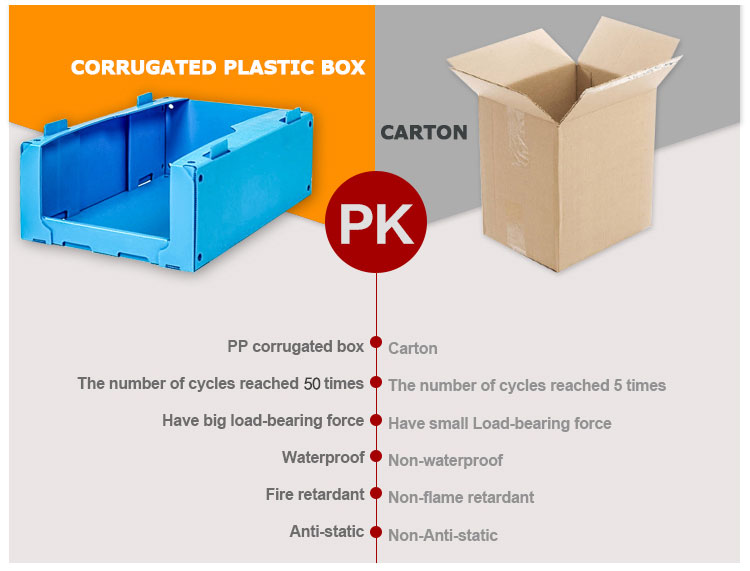
Traditional cartons use wood pulp or waste pulp as the core raw material, and the production of 1 ton of cartons consumes about 2.5 cubic meters of wood. Although the recycling rate of waste paper can reach over 80%, China still relies on imports for pulp supply, with an import dependence rate exceeding 60% in 2023. Corrugated plastic boxes are made by mixing high molecular materials with inorganic powders (such as calcium carbonate), with inorganic components accounting for up to 60% to 80%, which can reduce reliance on petroleum resources. The application of innovative materials such as stone plastic hollow board has further reduced the raw material cost and environmental load of plastic boxes.
Production stage: Significant differences in energy consumption and emissions
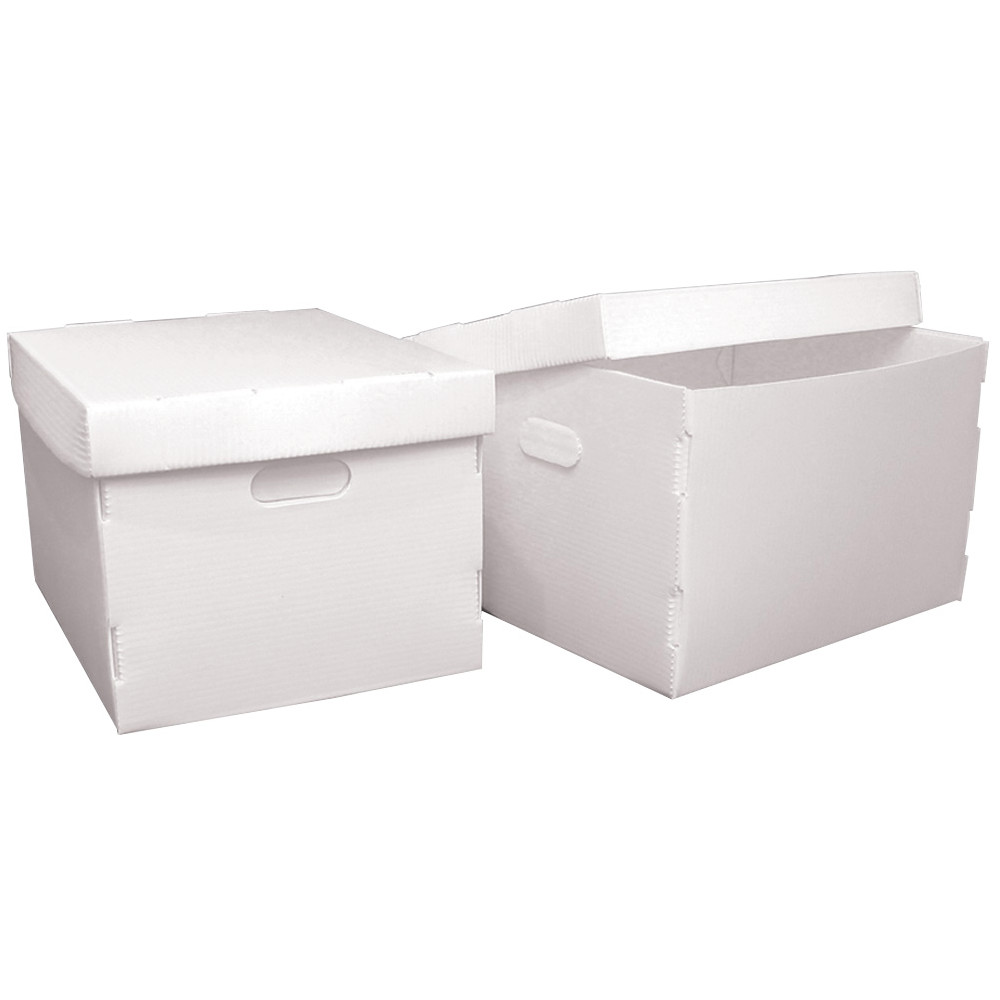
The production of cartons involves multiple processes such as pulping and molding. The energy consumption for each ton of product is approximately 800 kilowatt-hours, and the papermaking process discharges sulfur-containing wastewater and carbon dioxide. In contrast, plastic boxes are produced by an extrusion molding process with approximately 30% lower energy consumption and no wastewater discharge. A report from a certain industry indicates that the carbon emissions during the production of corrugated plastic boxes are 25%-40% lower than those of paper boxes. Especially when the proportion of recycled materials reaches 50%, the environmental advantage becomes more prominent.
Usage stage: Durability and Scene Adaptability
The traditional carton is easy to be deformed and damaged in the humid environment, and the average service life is only 1-3 times. Corrugated plastic boxes are water-resistant and shock-resistant, and can be reused more than 50 times. They are suitable for heavy-load scenarios such as fresh food cold chain and mechanical parts. Taking the express delivery industry as an example, China's express delivery business volume will reach 129 billion pieces in 2023. If 10% of cartons are replaced with plastic boxes, about 1.3 million tons of packaging waste can be reduced. However, plastic boxes are relatively heavy (about 2 to 3 times that of cardboard boxes), which may increase transportation energy consumption. Therefore, it is necessary to balance the load efficiency through optimized design.
Recycling phase: Recycling systems and environmental risks
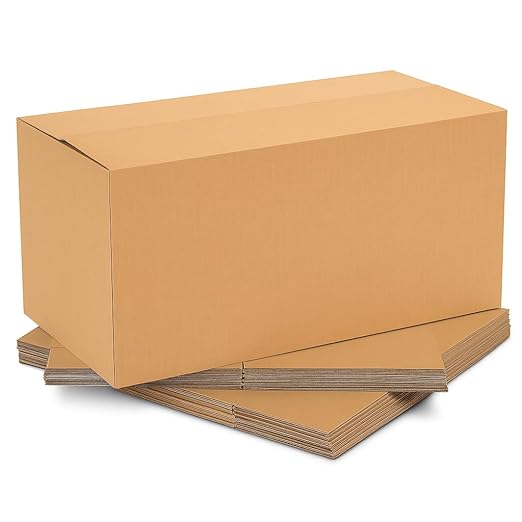
The paper box recycling system is mature, and waste paper can be directly recycled into new paper boxes. However, after multiple cycles, the fiber strength decreases, and ultimately, they still need to be disposed of through landfill. Corrugated plastic boxes can theoretically be 100% recycled, but the domestic recycled plastic industry chain is still not perfect. About 30% of the discarded plastic boxes enter the environment due to improper classification. However, the recycling rate of new materials such as aluminum corrugated has reached over 80%, providing new ideas for the sustainable development of plastic packaging.
Conclusion: Scenario-based selection and future trends
Corrugated plastic boxes demonstrate dual advantages of economy and environmental protection in long-cycle and high-turnover scenarios, while cartons remain cost-competitive in lightweight and single-use scenarios. With stricter environmental regulations (such as the EU carbon tariff policy), composite packaging materials with both durability and recyclability will become mainstream. Enterprises need to select suitable solutions based on their own logistics characteristics and minimize the carbon footprint throughout the entire packaging life cycle through a hybrid model of "cardboard boxes + plastic boxes".
