

In the packaging industry, the thickness of cardboard, as a core indicator affecting the comprehensive performance of folding cartons, is directly related to the product's protective ability, production efficiency and cost control. Industry data shows that for every 0.1 millimeter increase in paperboard thickness, the compressive strength of the paper box can increase by 15% - 20%, but the material cost also rises by 8% - 12%. How to find the optimal balance point between performance and cost has become the focus of attention for enterprises.
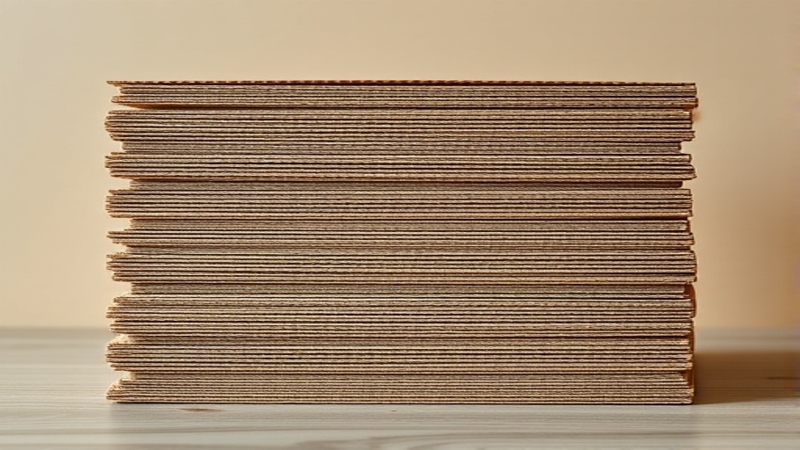
Performance dimension: Balance between strength and adaptability
The thickness of the cardboard is the foundation of the box's compressive strength. Taking the millimeter thickness continuous folding cardboard as an example, its products can replace the traditional wooden boxes, achieve 30% improvement in the compression performance of electronic product packaging, and effectively reduce the rate of cargo damage during transportation. However, thickness is not simply the greater the better: overly thick cardboard (such as over 5 millimeters) can lead to a decrease in folding accuracy, and in automated production lines, it is prone to machine jamming, which in turn affects production efficiency. Tests conducted by a certain furniture enterprise show that after reducing the thickness of the cardboard from 4 millimeters to 3 millimeters, the folding pass rate increased from 82% to 97%.

Cost structure: A dual game of materials and logistics
In terms of material costs, for every 0.5 millimeter increase in thickness, the cost of purchasing cardboard rises by approximately 12% to 15%. Taking a production line with an annual capacity of 150,000 square meters as an example, using 3 millimeter cardboard results in an annual increase in cost of about 800,000 yuan compared to 2.5 millimeter cardboard. However, thickness optimization can bring hidden benefits: Data shows that folded boxes made of 3 millimeter cardboard require 25% less storage space than traditional corrugated boxes, and the return transportation cost is reduced by 18%. An e-commerce company reduced the thickness of its cardboard from 3.5 millimeters to 2.8 millimeters, resulting in a 0.8-yuan decrease in single-box logistics cost, and saved over 3 million yuan in logistics expenses annually.
Industry Trend: Customization and Lightweighting Go Hand in Hand
The current market shows a two-tiered division: High-end electronic product packaging tends to use 1.8-2.5 millimeter thin and high-strength cardboard to achieve precise folding and lightweighting; The packaging of mechanical equipment uses 4-5 millimeter thick cardboard for enhanced protection. Enterprises can achieve customization with a thickness of 0.1 millimeter through fully automated production lines, meeting different scenarios' requirements. Data shows that in the corrugated paper market in China in 2025, the proportion of foldable cardboard has reached 38%, and products with a thickness of 2-3 millimeters occupy the mainstream share.
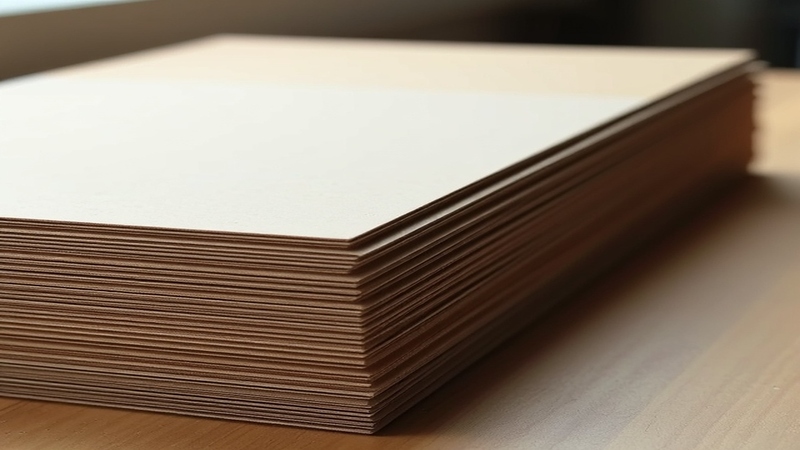
Industry experts point out that in the future, the design of cardboard thickness will pay more attention to "structural optimization instead of simple thickening". Through methods such as adjusting corrugation density and innovating composite processes, the thickness can be reduced while maintaining stable performance. This trend may drive the overall cost of the packaging industry to drop by another 10% to 15%. With the enhancement of environmental protection requirements and the optimization of supply chain efficiency, the precise design of cardboard thickness will become the key to cost reduction and efficiency improvement in the packaging industry. Enterprises need to establish a scientific thickness selection model in combination with product characteristics, logistics conditions and storage environments, and achieve the optimal cost configuration on the basis of ensuring product safety.
