

When a white-collar worker from an Internet company opened a Courier box and folded corrugated cardboard into a simple bookshelf according to the instructions, this "paper furniture" carrying over 30 books not only saved her 50% of the moving cost but also became a symbol of an eco-friendly lifestyle on social media. This scene reflects the profound changes taking place in the Chinese furniture market: The paperboard furniture, once regarded as a temporary substitute, is accelerating its transition to the mainstream category by virtue of its low-carbon attributes, innovative design and cost advantages. According to the latest report of Zhongyan Puohua, the market size of corrugated composite board furniture in China has reached 48.63 billion yuan in 2026, an increase of 29.8% year-on-year. It is expected to exceed 100 billion yuan in 2030, accounting for 14.6% of the board furniture market share.
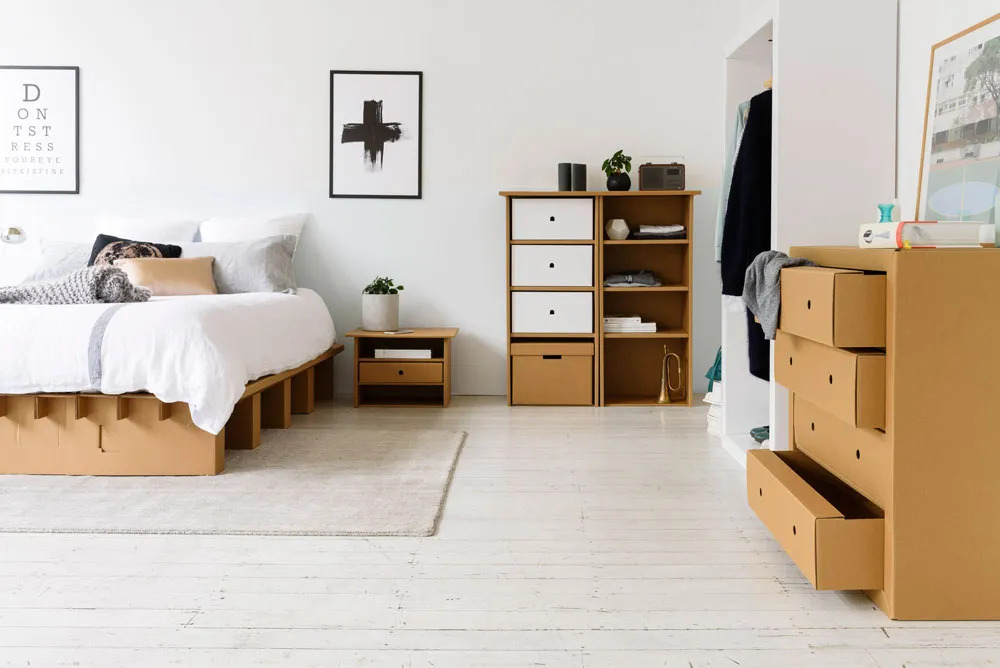
Policy-driven and technological breakthroughs reshape the industrial logic
Under the "dual carbon" strategy and the global wave of green supply chain compliance, the low-carbon genes of cardboard furniture have become the key to breaking the deadlock. Test data shows that the full life cycle carbon emissions of corrugated paper-based composite materials are 42% lower than those of traditional particleboard, and the formaldehyde emission is only 0.008mg/m³, which is far below the national standard. The value-added tax (VAT) immediate refund policy implemented by the State Taxation Administration and the mandatory requirements of the "Green Supply Chain Management Specifications for Furniture Manufacturing Industry" have enabled leading enterprises to gain a cost advantage of approximately 300 yuan per ton of product. At the technical level, the mechanical properties of honeycomb structure and corrugated composite technology break through, so that the load-bearing capacity of cardboard furniture can be increased to 300 kg/m2, and the waterproof coating process can extend the service life to more than 5 years, completely changing the stereotype of "fragile and vulnerable".
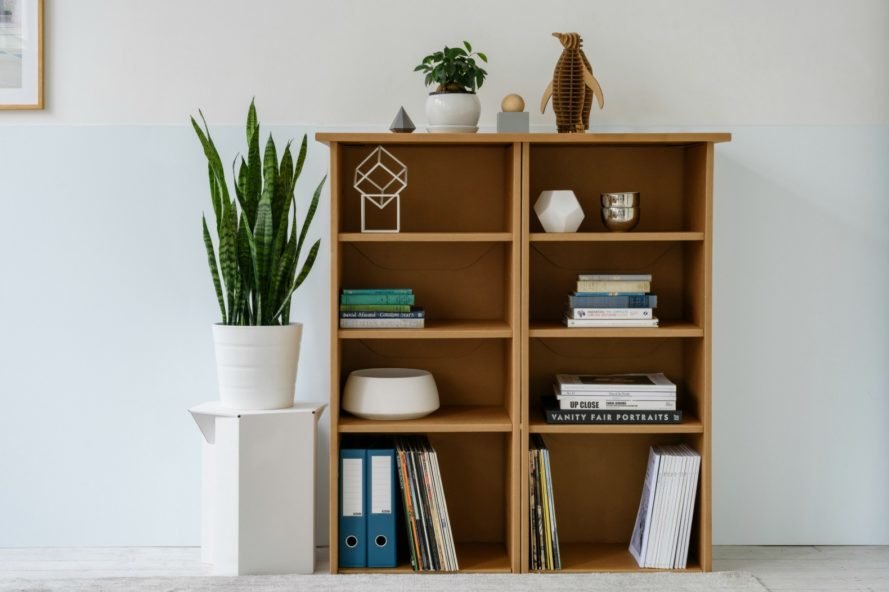
Revolutionizing consumption scenarios opens up growth opportunities
The rise of cardboard furniture precisely meets the demands of three core scenarios. In the field of cross-border e-commerce, the foldable design has increased the container loading rate to 95% and reduced the return rate to 3.2%. A certain overseas brand has cut its logistics costs by 40% through the "packaging as furniture" model. In the modular office scenario, Bytedance and other enterprises use cardboard partition systems to reduce the cost of office space per capita by 25% and increase the disassembly efficiency by 3 times. In the sinking market, "hundred-yuan level" environmental furniture emerged. A folding table launched by a certain brand was priced at 99 yuan, and the sales volume exceeded 100,000 pieces in the first half year. Behind these scenario innovations lies the pursuit of "light asset lifestyle" by Generation Z consumers - data shows that among those under 30 years old, 62% are willing to pay a 10%-15% premium for environmental attributes.
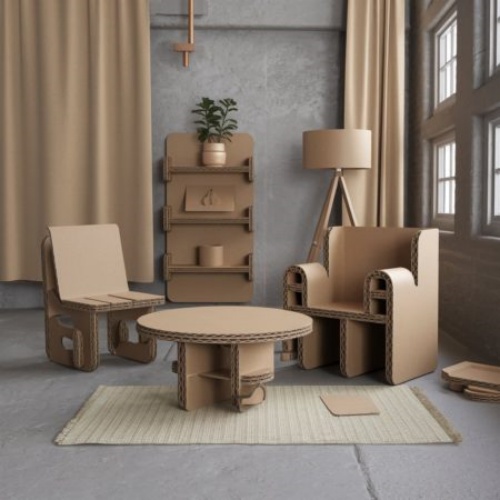
Collaborative construction of the industrial chain builds competitive barriers
The industry has formed a complete ecology from waste paper recycling, technology research and development to channel innovation. The upstream paper giant has built more than 200 sorting centers to ensure the stability of recycled pulp supply, and the proportion of domestic recycled pulp is 88%. The introduction of AI quality inspection and digital twin technology in midstream enterprises has increased the OEE (equipment comprehensive efficiency) of the production line to 82%, and the cost of the whole line of domestic equipment such as Jingshan Light Machinery is 30%-40% lower than that of imports. The downstream is innovative "carton bank" recycling mode, consumers with old furniture can exchange for new purchase discount, a brand to achieve a recovery of more than 60%. This closed-loop ecosystem not only reduces the risk of raw material fluctuations but also helps enterprises cope with green trade barriers such as the EU's EUDR through carbon footprint data management. It is expected that China's cardboard furniture export value will exceed 8 billion yuan in 2025.
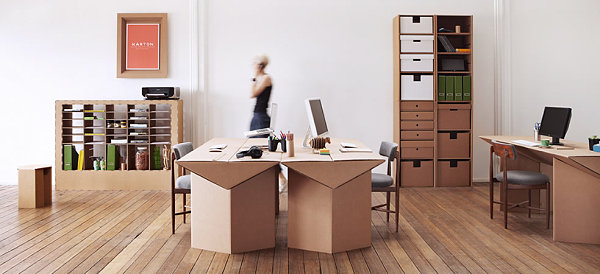
From IKEA's "Corrugated Paper Children's Room" series to the modular design of domestic emerging brands, cardboard furniture is undergoing a cognitive transformation from "emergency solution" to "lifestyle choice". With the development of circular economy legislation and the deepening of intelligent manufacturing, this has been marginalized segment category, is expected in the next five years to reshape the pull of the billions of furniture market competition pattern, for global green household industry "plan" in China.
