

What is a drop test?
Drop test is a key test method to evaluate the resistance of product packaging to accidental drop impact during transportation, storage or use. It is mainly divided into two categories: packaging drop and bare metal drop. The former simulates the vertical impact that packaging parts may encounter in the logistics link, and tests the protection performance of packaging to internal products. The latter is aimed at the anti-fall ability of the product itself in daily use, such as the accidental drop scene of mobile phones, electronic devices and other handheld products. Tests are usually conducted on rigid surfaces such as concrete, steel or marble, simulating risks in different transportation environments by controlling the drop height, frequency and direction.

Why is the drop test so crucial?
According to statistics from the logistics industry, more than 30% of goods damage is caused by accidental drops during transportation. The core value of the drop test lies in:
1. Reduce enterprise costs: By verifying the reliability of packaging, minimize losses caused by returns, exchanges, and claims due to damaged goods.
2. Ensure product quality: Especially for fragile items (such as electronic devices, glassware) and precision instruments, the failure of packaging may directly lead to functional damage;
3. Compliance and trust: The international logistics system generally requires product packaging to pass specific drop standards. For example, platforms such as Amazon require packaging to meet ISTA 3A test specifications, and those who fail to meet the standards will face storage restrictions.
The key factors affecting the drop resistance of packaging
1. Material selection: The energy absorption properties of the cushioning material directly determine the protection effect. For instance, EPS foam is suitable for lightweight products, while EPE pearl cotton can maintain its elasticity under repeated impacts, and honeycomb cardboard strikes a balance between environmental friendliness and structural strength.
2. Structural design: The internal fixation methods of the packaging (such as the layout of card slots and buffer pads) should match the center of gravity of the product to prevent internal displacement during drops. The number of corrugation layers of the carton (for example, five layers of corrugation are suitable for heavy-duty products) and the bonding strength also affect the overall impact resistance.
3. Packaging process: The width of the tape seal, the tensile strength of the stretch film, and even the position of the packing strap can all affect the structural stability of the packaging when it drops.
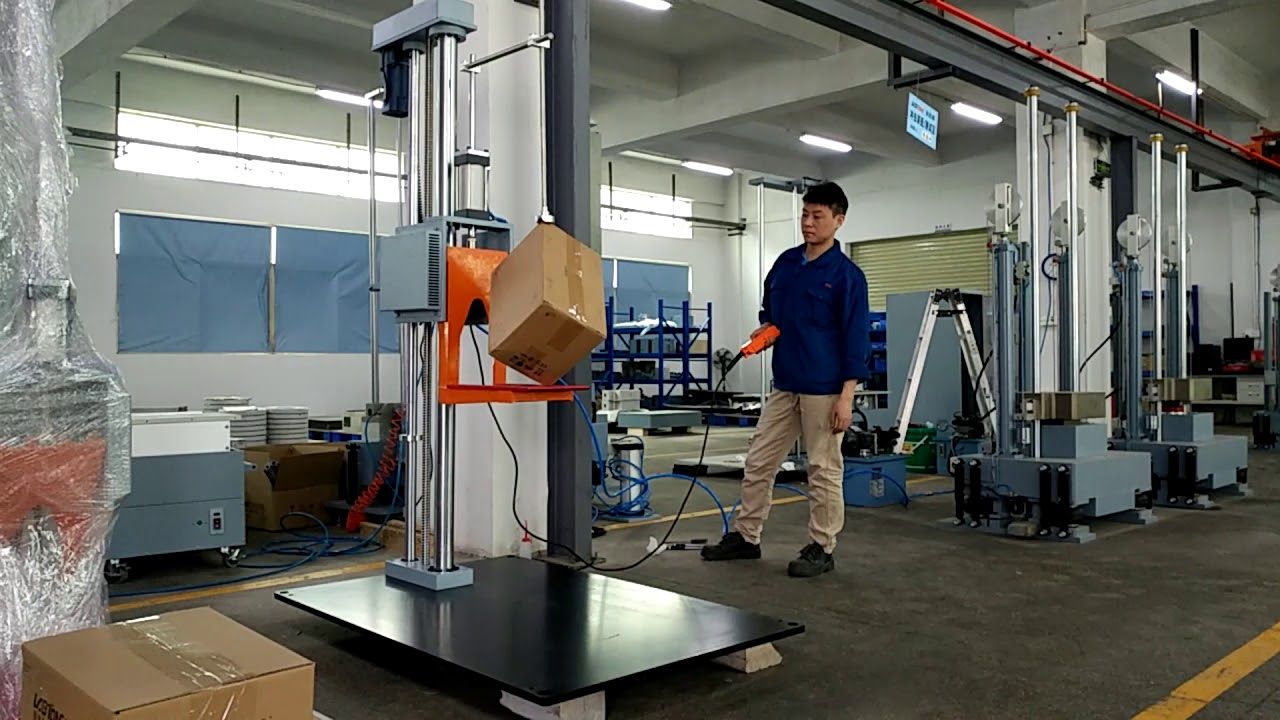
Drop test standards and procedures
The mainstream international standards include:
- GB/T 4857.5 (China) : It stipulates the drop methods of transport packages, covering three drop methods: surface, edge and corner.
- IEC 60068-2-32 (International Electrotechnical Commission): For electronic devices, it recommends a drop height of 100cm for products weighing ≤ 2kg;
- ASTM D5276 (American Society for Testing and Materials) : It has detailed the material requirements for drop surfaces and emphasized the repeatability of test results.
Test basic process:
1. Parameter confirmation: According to the weight of the product (such as 10kg of goods corresponding to the fall height of about 80cm), transport (air, land transport) to determine the test conditions;
2. Sample preparation: Simulate the actual packaging condition, including the complete assembly of the contents, cushioning materials, and outer packaging;
3. Conduct the test: Complete the drops from the specified height and direction as per the standard (such as 3 drops from the face and 1 drop from the corner).
4. Result determination: Check if the product functions normally, if the packaging is damaged, and if any internal components have fallen off. Minor wear or recoverable deformation is generally considered as qualified.
Practical Tips for Pass-Through Drop Test
1. Optimize buffer design: Adopt a "gradient buffer" structure. The outer layer uses hard materials to resist impact, and the inner layer uses soft materials to absorb energy (such as a combination of bubble wrap and sponge);
2. Center of gravity control: Fix heavy objects at the center of the packaging to prevent rolling due to eccentricity when dropped;
3. Predictive test verification: Before the formal test, conduct a preliminary verification through a small drop test machine (such as a height of 300-500mm), and adjust the packaging plan in a timely manner;
4. Reference industry cases: Drawing on the successful design of similar products, for example, the laptop packaging generally adopts the structure of "heaven and earth cover + four sides buffer", which effectively disperse the impact force of falling.

With the rapid development of e-commerce logistics, the drop resistance of packaging has become an invisible indicator of product competitiveness. Enterprises need to select appropriate testing standards and packaging solutions in light of the characteristics of their own products to ensure the safety of goods throughout the process from the production end to the hands of consumers.
