

Under the background of continuous upgrading of public cultural space, the library has evolved from a traditional place for collecting books to a compound space that integrates learning, communication and cultural co-construction. In recent years, a new type of furniture with core advantages of environmental protection and flexibility - cardboard furniture - is gradually becoming an innovative choice for library space design. This kind of paper material processed with special techniques, through structural innovation and technological upgrading, is redefining the functional boundaries and aesthetic standards of library furniture.
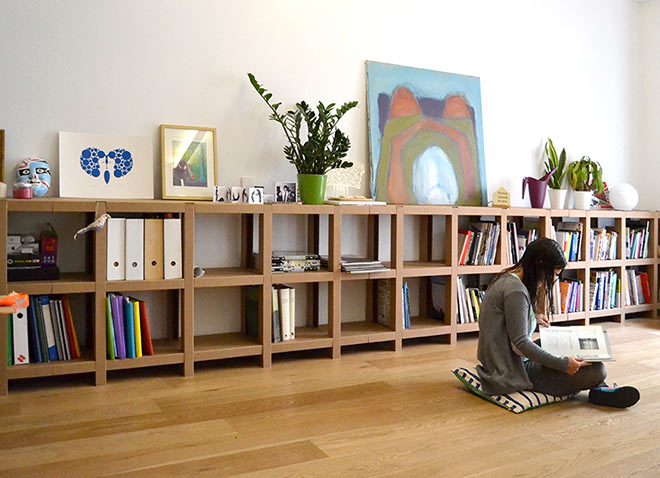
Material Revolution: A Technological Breakthrough from "Fragile" to "Capable of Bearing 300 Kilograms"
In traditional perception, paper materials were considered "fragile and easily damaged". However, with the application of modern technology, their performance has achieved a significant leap. The "Piano Chair" adopts a honeycomb structure design. It uses long-fiber kraft paper as the raw material and disperses pressure through hexagonal geometric mechanics, capable of bearing up to 300 kilograms, equivalent to the combined weight of six adults. This structure is inspired by the efficient mechanical principles of nature's honeycomb and achieves the maximum load-bearing capacity with the least material usage. Its seat design further optimizes the pressure distribution to ensure comfort during long-term use. The antibacterial and moisture-proof cardboard storage box launched by Japan's Tamaya Company, through special treatment, maintains a load-bearing capacity of 15 kilograms while achieving a five-year or longer cycle lifespan. It provides an environmentally friendly solution for library storage systems.
The breakthrough in material processing technology has endowed cardboard furniture with practical value. The surface of the cardboard treated with waterproof coating can resist daily splashing, and cooperate with the humidity control system of the library to effectively solve the problem of moisture resistance. By adding flame retardants, some products have reached the B1 level fire prevention standard, which meets the safety requirements of public Spaces. These technological innovations have enabled cardboard furniture to move from conceptual design to practical application, providing a new option with both environmental attributes and practical functions for libraries.
Space Adaptation: Modular Design Reconstructs Library Scenarios
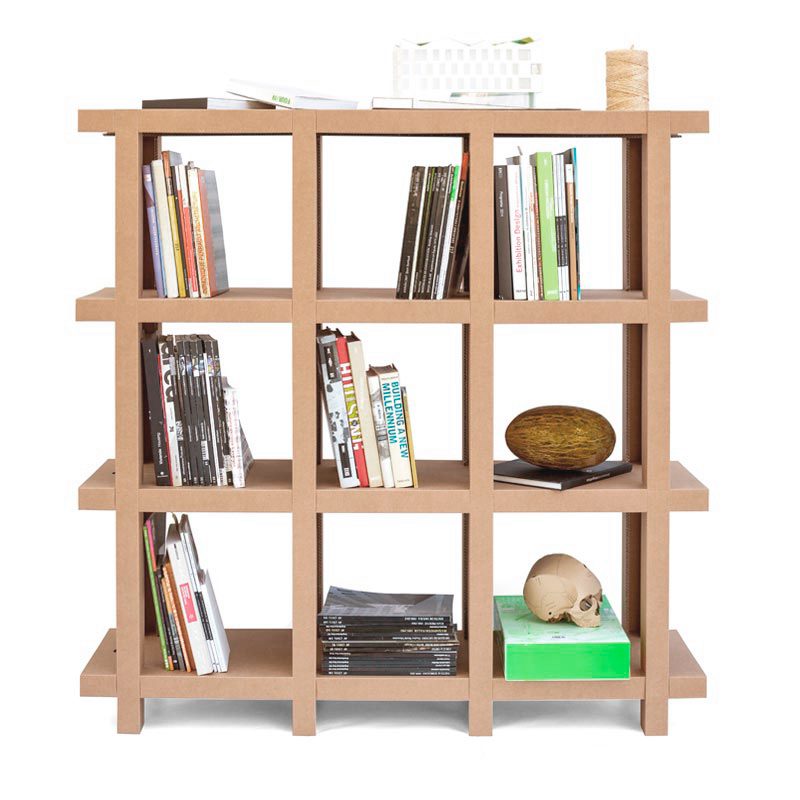
The modular characteristics of paperboard furniture perfectly meet the space requirements of modern libraries. In a renovation project of an open library at a certain university, foldable paperboard partitions and modular reading units were adopted, achieving a flexible layout of "one book, one space". These pieces of furniture weigh only one third as much as traditional wooden furniture. Staff can easily move and reassemble them, enabling the 1,000-square-meter reading area to be transformed from lecture mode to group discussion mode within two hours. The youth section of a certain public library uses brightly colored cardboard bookshelves. By piecing together modules, they form a "reading maze" of varying heights, which not only fulfills the function of book collection but also creates an exploratory spatial experience.
The practice of professional library furniture brands such as Sheng 'ao shows that cardboard furniture has found a balance between standardization and customization. Its product line includes various forms such as single-person study desks, multi-person collaborative long desks, and semi-enclosed self-study seats. The desktop design reserves positions for charging ports and lighting systems, meeting the needs of digital reading. In a community library in Shenzhen, cardboard furniture and steel bookshelves form a material contrast. Through the combination of warm wood color and white, a modern yet cozy reading atmosphere is created. The usage rate has increased by 40% compared to before the renovation.
Sustainable Value: Environmental Considerations throughout the Product Lifecycle
The environmental advantages of cardboard furniture are consistent throughout the entire product lifecycle. During the production stage, its raw materials are sourced from sustainably managed forest resources, and the energy consumption is reduced by 50% compared to traditional furniture; During the usage stage, the lightweight feature reduces carbon emissions from transportation. During the disposal stage, 100% degradable materials can naturally return to the ecological cycle. After a library in London adopted cardboard furniture, its annual carbon emissions were reduced by approximately 8 tons, equivalent to the carbon sequestration effect of planting 400 trees.
This environmental attribute precisely aligns with the global trend of green transformation in libraries. In 2025, all the athletes' apartments in the Paris Olympic Village will be equipped with recyclable cardboard seats, and the design concept has been borrowed by many international libraries. In China, the "Flash Reading Area" of Nanshan Library in Shenzhen uses entirely rented cardboard furniture. After the event, all materials are recycled and reused, generating zero waste. This "temporary space, permanent environmental protection" model provides a sustainable solution for the thematic activities of libraries.
With the continuous advancement of material technology, cardboard furniture is evolving from auxiliary furniture to the main system. The special collection area of a professional research library has begun to trial use cardboard display stands. The surface of these stands has been specially treated to prevent book mold growth and avoid potential damage to ancient books caused by acidic wood. This innovative application indicates that the application boundaries of cardboard furniture in the library field are constantly expanding.
Adapted from the bearing performance to space, from environmental protection value to cost control, cardboard furniture, with its unique advantages for the library space design provides a new way of thinking. Under the dual impetus of the "carbon neutrality" goal and the construction of a "learning society", this form of furniture that integrates natural inspiration, engineering wisdom and humanistic care may become an important direction for the future innovation of library Spaces.
